Language is the house of the soul
Our Programs
Women's Leadership & Economic Empowerment
We work alongside Indigenous women and cooperatives to build economies rooted in their knowledge, land, and priorities. Through training, technical support, and ethical market connections, we strengthen women-led enterprises, from agroecology to traditional crafts and ecotourism. Our goal: economic autonomy, cultural continuity, and resilient communities, led by women on their own terms."
Cultural Memory & Language Revitalization
Indigenous languages carry irreplaceable memory and knowledge, yet many are at risk. We work with speakers to record oral histories, build community-owned digital archives, and create language tools that meet their real needs. Technology becomes a bridge for cultural survival, keeping languages alive and in the hands of communities.
Youth, Education & Cultural Resilience
Language, culture, and identity are sustained when generations learn together. We connect elders and youth through storytelling, traditional food, ancestral arts, and land-based learning, strengthening ties between past, present, and future. Co-created with each community, our flexible curriculum is rooted in local knowledge and cultural traditions. Through listening circles, hands-on activities, and celebrations, elders share language and wisdom while youth build belonging and leadership. Nativa provides facilitation, materials, and technical support, while knowledge remains within the community. These intergenerational spaces help ensure that language, memory, and cultural practices continue to thrive.
Intercultural Health, Traditional Medicine & Wellbeing
Health is inseparable from language, land, and cultural identity. Nativa partners with community health promoters, elders, and local clinics to support intercultural health education, strengthen respectful pathways for traditional medicine knowledge-sharing, and expand bilingual health resources. The goal is improved wellbeing and dignified care-while safeguarding the integrity of medicinal practices and the ecosystems that sustain them.
The school, Escuela Palmichal
School Farm – Somos Semillas
"We Are Seeds" is Nativa Foundation's school program that turns the farm into a living classroom, blending Indigenous ancestral knowledge with science, math, and ecology. Rooted in the belief that language is the house of the soul, learning happens through hands-on engagement with the land—observing nature's cycles, biodiversity, and food systems. This community-centered experience strengthens identity, youth leadership, and cultural continuity, nurturing students as seeds who grow in belonging, resilience, and care for their territories.
Culture, Art, and Memory
In territories affected by conflict and high school dropout rates, we create safe spaces where young people can build a sense of belonging. Through community-led bilingual education, cultural activities, and artistic expression, ancestral languages and knowledge become expressions of resilience. Art, culture, and traditional wisdom strengthen identity, reconnect youth with their roots, and open pathways toward the future. By nurturing creativity and cultural pride, the program also helps reduce vulnerability to forced recruitment and supports young people in reclaiming their place within their communities.
Guardians of Knowledge, College Sponsorship Program
Through this program, we invite sponsors to support students as they complete high school and continue on to higher education, often at universities far from their communities. Now in its sixth year, the program has supported 5 students in graduating from high school and helped 13 more access university studies. This ongoing support opens pathways to education, opportunity, and long-term personal growth. For more information, please contact: foundation@colombianativa.org
Later Achievements
Testimonials
Victor Jair Isco
"I'm really happy I escaped the guerrilla and can study here now."
Escaped from the guerrilla (13-year-old boy)Our Team
Foto-Diasporas
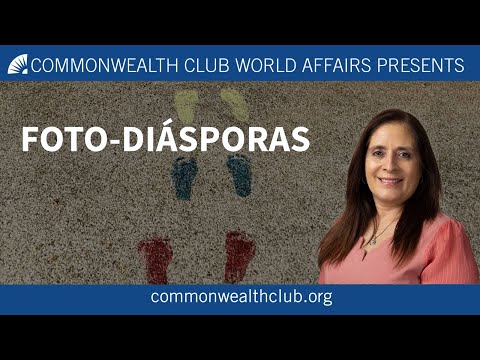
A traveling photo exhibition on forced displacement of Colombians in the U.S. This project emerged from multilateral coordination led by Consulate Social Advisor Saday Osorio Córdoba. Hosted by Ambassador Sonia Marina Pereira Portilla, Consul General of Colombia.
Sponsors: Humanity United, the University of Massachusetts Amherst, and the Colombian Unit for Victims.
Supporters: Commonwealth Club World Affairs, the Consulate of Colombia in San Francisco, and Colombia Nos Une.
Impact: 300+ at opening, 2,300 visitors over two months.
Press
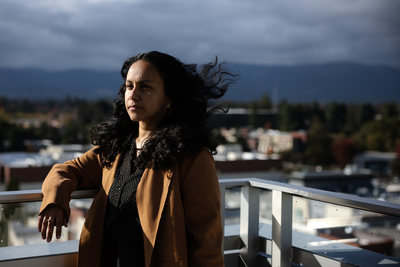
Human rights advocacy for an Afro-Colombian migrant
The San Francisco Standard — Coverage of the human rights case of an Afro-Colombian migrant
Read More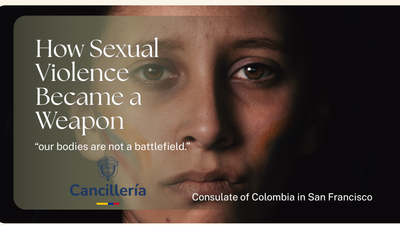
Our Bodies Are Not a Battlefield.
As a featured speaker for the United Nations Association of San Francisco’s 16 Days of Activism Against Gender-Based Violence, Saday Osorio Córdoba shed light on conflict-related sexual violence in Colombia, sharing firsthand narratives of how armed groups have targeted Indigenous, Afro-Colombian, and campesina girls.
Read More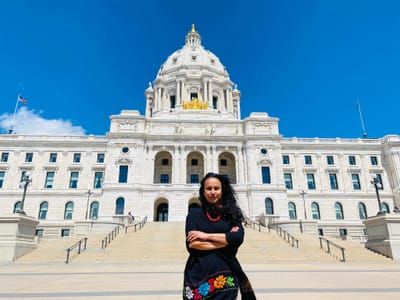
International Collaboration Agreement Signed to Support Victims of Violence in Colombia
For over 15 years, SADAY OSORIO CÓRDOBA has been creating bilingual curricula in indigenous languages and English/Spanish and has been actively participating in the Afro-Latino community in San Francisco, California, linking artistic and social projects between private and governmental organizations.
Read MoreStrategic Partners


Contact
- 111 Pine Street, San Francisco, CA 94111, USA
- Suite 1400, Office # 10
- +1-4152351483
- immigrant@colombianativa.org
- Mon-Fri - 08:00-19:00